45 Acres of Agricultural Land Available for Sale A 45-acre agricultural property is available for sale in Sirikondapalem Village Panchayat, (1/4 km from sarigondapalem Thanda on velgatur road) under Bollapalli Mandal, Vinukonda Sub-Division, Palnadu District. Price: ₹15 Lakhs per Acre (Negotiable) Key Highlights: Excellent investment opportunity for NRIs and investors Water available throughout the year (365 days) Suitable for cultivating 3 crops annually Road Facility. Call 9989977137
The Impact of the War in Ukraine on the Indian Economy Too • Andhra Pradesh to enact law soon for protection of Backward Classes: CM Naidu • BC communities hopeful of political reservations in local body elections • 95% of government jobs are for locals: AP government • APSRTC employees urge EPFO to ensure higher pension, resolve pending issues • బీసీ సంక్షేమ శాఖ నూతన ఆదేశాలు • తెలంగాణలో బీసీ సంక్షేమ పథకాలకు 5,000 కోట్ల నిధులు మంజూరు • 85% బీసీలకు రిజర్వేషన్ డిమాండ్ తీవ్రం • ఆంధ్రప్రదేశ్లో వెనకబడిన వర్గాల జనాభా లెక్కల సర్వే ప్రారంభం • హైదరాబాద్లో భారీ వర్షాలు • బీసీ విద్యార్థులకు ఉచిత కోచింగ్ సెంటర్లు ఏర్పాటు — ప్రభుత్వ ప్రకటన • బీసీ నాయకుల సమావేశంలో కీలక తీర్మానాలు — రాష్ట్రవ్యాప్తంగా ఆందోళన • బీసీ వర్గాలకు 27% రిజర్వేషన్లు అమలు చేయాలని కేంద్రానికి డిమాండ్
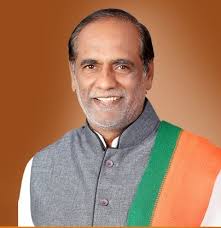
Kova Laxman is an Indian politician from the state of Telangana who currently the National President for Bharatiya Janata Party's OBC Morcha since 26 September 2020. He is a former State President of Bharatiya Janata Party in Telangana from 2016 to 2020. He represented Musheerabad Assembly constituency twice as MLA from 1999-2004 in Andhra Pradesh Assembly and from 2014-2018 in Telangana Legislative Assembly.[1][2]
Political career
He was elected as MLA for the second time from Musheerabad Assembly constituency[3] in 2014 Telangana Assembly election.
He served as the floor leader of the Bharatiya Janata Party from 2014 to 2016 and then was made the second state president of Telangana BJP from 2016 to 2020.
He was appointed the President of the National OBC Morcha, on 26 September 2020.[4]
K. Laxman was appointed as returning officer for BJP’s internal polls on 14 October 2024.[5]
Early political career
From 1978 to 1980 he was elected as President, P.G. Science College, Osmania University Students Union on ABVP panel.
In 1980, he joined Bharatiya Janata Party with the background of RSS & Student Leader (ABVP) in Osmania University.
From 1984 to 1988, he was the General Secretary of Bharatiya Janata Party, Musheerabad Assembly, Andhra Pradesh.
From 1988 to 1994, he was the General Secretary of Bharatiya Janata Party, Hyderabad City, Andhra Pradesh.
From 1994 to 1999, he was the President of Bharatiya Janata Party, Hyderabad City, Andhra Pradesh.
In the year 1999, he contested from Musheerabad Assembly Constituency and won as an MLA by highest majority of 18,562 votes over Congress Stalwart.
From 1999 to 2002, he was made the Deputy Floor Leader of the Bharatiya Janata Party, Andhra Pradesh.
From 2002 to 2010, he was the State General Secretary & Official Spokesperson of the Bharatiya Janata Party, Andhra Pradesh.
From 2010 to 2013, he was the National Secretary of Bharatiya Janata Party & In-charge for Pondicherry State.
From 2013 to 2014, he was a Member in Narendra Modi's team for Sardar Vallabhai Patel, Statue of Unity - “World’s highest Statue” & In-charge for Southern States and toured all the southern states.
In the year 2014, he won as an MLA from Musheerabad Assembly with highest ever majority of 27,750 votes over TRS candidate.
From 2014 to 2016, he was elected as the Floor Leader of Bharatiya Janatha Party in the Telangana Assembly.
From 2016 to 2020, he was the State President of the Bharatiya Janata Party in Telangana State.
Nitish Kumar
MPs(RS)
📍 Bihar
JD(U)
🗓️ 10 April 2026 - PRESENT
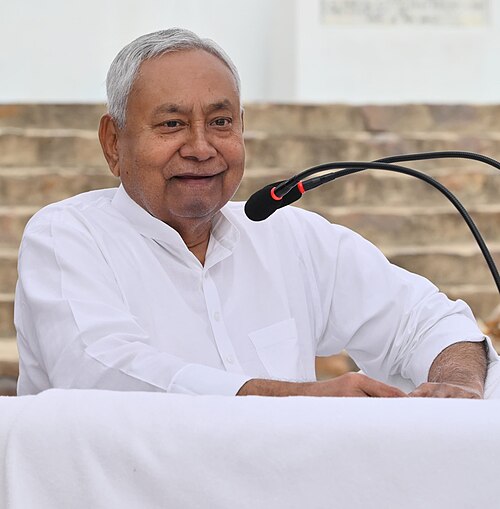
Nitish Kumar (born 1 March 1951) is an Indian politician from Bihar. He is currently serving as a Member of Parliament in the Rajya Sabha. The national president of the Janata Dal (United), he was the longest serving Chief Minister of Bihar, serving briefly in 2000, from 2005 to 2014, and again from 2015 to 2026.[1][2][3]
Kumar first entered politics as a member of the Janata Dal, becoming an MLA in 1985. A socialist, Kumar founded the Samata Party in 1994 along with George Fernandes. In 1996, he was elected to the Lok Sabha, and served as a Union Minister in the government of Atal Bihari Vajpayee, with his party joining the National Democratic Alliance (NDA). In 2003, his party merged into the Janata Dal (United), and Kumar became its leader. In 2005, the NDA won a majority in the Bihar Legislative Assembly, and Kumar became chief minister heading a coalition with the Bharatiya Janata Party (BJP).
In the 2010 state election, the governing coalition won re-election in a landslide. In June 2013, Kumar broke with the BJP after Narendra Modi was named as their candidate for prime minister, and formed the Mahagathbandhan, a coalition with the Rashtriya Janata Dal (RJD) and Indian National Congress (INC) and joined in United Progressive Alliance (UPA). On 17 May 2014, Kumar resigned as chief minister after the party suffered severe losses in the 2014 general election, and was replaced by Jitan Ram Manjhi. However, he attempted to return as chief minister in February 2015, sparking a political crisis that eventually saw Manjhi resign and Kumar become chief minister again. Later that year, the Mahagathbandhan won a large majority in the state election. In 2017, Kumar broke with the RJD over corruption allegations and returned to the NDA, leading another coalition with the BJP; at the 2020 state election his government was narrowly reelected. In August 2022, Kumar left the NDA, rejoining the Mahagathbandhan; he would also become a founding member of the Indian National Developmental Inclusive Alliance.[4][5] In January 2024, Kumar again left the Mahagathbandhan and rejoined the NDA, with the government winning the 2025 state election in a landslide.[6] In March 2026, Kumar announced his pending resignation as chief minister and intention to contest the 2026 Rajya Sabha elections, which he won.[7] And finally on 10 April 2026, he was sworn in as the Member of Parliament, Rajya Sabha.[8][9]
Early life
•
Nitish Kumar paying tribute to his wife Manju Siha through her statue.[10]
Kumar was born on 1 March 1951 in Bakhtiarpur, Bihar, to his mother Parmeshwari Devi and his father Kaviraj Ram Lakhan Singh, an ayurvedic practitioner.[11] Nitish belongs to Kurmi agricultural caste.[12][13] His nickname is 'Munna'.[14][15] His native village is Kalyan Bigha, situated in the Nalanda district.[16]
He has earned a degree in Electrical Engineering[17] from Bihar College of Engineering (now NIT Patna) in 1972.[18] He joined the Bihar State Electricity Board, half-heartedly, and later moved into politics.[19][20] He married Manju Kumari Sinha (1955–2007) on 22 February 1973 and the couple has one son, named Nishant.[13] Manju Sinha died in New Delhi on 14 May 2007 due to pneumonia.[21]
Early political career
Kumar belongs to a socialist class of politicians. During his early years as a politician, he was associated with Ram Manohar Lohia, S. N. Sinha, Karpuri Thakur, and V. P. Singh.[18][22] Kumar participated in Jayaprakash Narayan's movement between 1974 and 1977[23] and joined the Janata party headed by Satyendra Narain Sinha.[24] Unlike Lalu Prasad Yadav, who is considered as a crowd puller, Kumar is considered as a deft communicator.[25]
Kumar fought and won his first election to the state assembly from Harnaut in 1985. In the initial years, Lalu Prasad Yadav was backed by Kumar as leader of the opposition in the Bihar Assembly in the year 1989, but Kumar later switched his loyalty to the BJP in 1996, after winning his first Lok Sabha seat from Barh.[26]
The Janata Dal had survived splits in the past, when leaders like Kumar and George Fernandes defected to form the Samata Party in 1994. Still, it remained a baseless party after the decision of Lalu Prasad Yadav to form Rashtriya Janata Dal in 1997. The second split took place before Rabri Devi assuming power, which resulted in Janata Dal having only two leaders of any consequence in it, namely Sharad Yadav and Ram Vilas Paswan. Paswan was regarded as the rising leader of Dalits and had the credit of winning his elections with unprecedented margins. His popularity reached the national level when he was awarded the post of Minister of Railways in the United Front government in 1996 and was subsequently made the leader of Lok Sabha. His outreach was witnessed in the western Uttar Pradesh too, when his followers organised an impressive rally at the behest of a newly floated organisation called Dalit Panthers.[27]
Sharad Yadav was also a veteran socialist leader, but without a massive support base. In the 1998 parliamentary elections, the Samata Party and Janata Dal, which were in a much weaker position after the formation of RJD, ended up eating each other's vote base. This made Kumar merge both parties to form the Janata Dal (United).[28]
In 1999 Lok Sabha elections, Rashtriya Janata Dal received a setback at the hands of BJP+JD(U) combine. The new coalition emerged leading in 199 out of 324 assembly constituencies, and it was widely believed that in the forthcoming election to the Bihar state assembly, the Lalu-Rabri rule would come to an end. The RJD had fought the election in an alliance with the Congress, but the coalition didn't work, making state leadership of Congress believe that the maligned image of Lalu Prasad after his name was drawn in the Fodder Scam had eroded his support base. Consequently, Congress decided to fight the 2000 assembly elections alone.[29]
The RJD had to be satisfied with the communist parties as coalition partners, but the seat-sharing conundrum in the camp of National Democratic Alliance made Kumar pull his Samta Party out of the Sharad Yadav and Ram Vilas Paswan faction of the Janata Dal. Differences also arose between the BJP and Kumar as the latter wanted to be projected as the Chief Minister of Bihar, but the former was not in favour. Even Paswan also wanted to be a CM face. The Muslims and OBCs were too divided in their opinion. A section of Muslims, which included the poor communities like Pasmanda, were of the view that Yadav only strengthened upper Muslims like Shaikh, Sayyid and Pathans, and they were in search of new options.[29]
Yadav also alienated other dominant backward castes like Koeri and Kurmi since his projection as the saviour of Muslims. It is argued by Sanjay Kumar that the belief that "the dominant OBCs like the twin caste of Koeri-Kurmi will ask for a share in power if he seeks their support, while the Muslims will remain satisfied with the protection during communal riots only" made Yadav neglect them. Moreover, the divisions in both camps made the political atmosphere in the state a charged one in which many parties were fighting against each other with no visible frontiers. JD(U) and BJP were fighting against each other on some of the seats, and so was the Samta Party. The result was a setback for the BJP, which in media campaigns was emerging with a massive victory. RJD emerged as the single largest party and with the political manoeuvring of Lalu Yadav, Rabri Devi was sworn in as the Chief Minister again.[30] The media largely failed to gauge the ground level polarisation in Bihar.[29] According to Sanjay Kumar:
There can be no doubt about one thing: the upper-caste media was always anti-Lalu, and it was either not aware of the ground-level polarisation in Bihar, or deliberately ignored it. If the election result did not appear as a setback for RJD, it was largely because of the bleak picture painted by the media. Against this background, RJD's defeat had appeared like a victory.[31]
Even after serving imprisonment in connection with the 1997 scam, Lalu seemed to relish his role as the lower-caste jester. He argued that corruption charges against him and his family were the conspiracy of the upper-caste bureaucracy and media elites threatened by the rise of peasant cultivator castes.
In 2004 General elections, Lalu's RJD had outperformed other state-based parties by winning 26 Lok Sabha seats in Bihar. He was awarded the post of Union Railway minister but the rising aspirations of the extremely backward castes unleashed by him resulted in JD(U) and BJP led coalition to defeat his party in 2005 Bihar Assembly elections.[32]
Kumar as a Union Minister
Union Minister for Railways Shri Nitish Kumar entering Parliament to present Interim Railway Budget (2004–05) in New Delhi on 30 January 2004
Nitish was briefly the Union Minister for Railways and Minister for Surface Transport and later, the Minister for Agriculture in 1998–99, in the NDA government of Atal Bihari Vajpayee. In August 1999, he resigned following the Gaisal train disaster, for which he took responsibility as a minister.[33] However, in his short stint as Railway Minister, he brought in widespread reforms, such as internet ticket booking facility in 2002,[34][35] opening a record number of railway ticket booking counters and introducing the tatkal scheme for instant booking.
Later that year, he rejoined the Union Cabinet as Minister for Agriculture. From 2001 to May 2004, he was – again – the Union Minister for Railways.[36] In the 2004 Lok Sabha elections, he contested elections from two places, when he was elected from Nalanda but lost from his traditional constituency, Barh.[37]
Chief Minister of Bihar
Kumar is a member of the Janata Dal (United) political party. As the chief minister, he appointed more than 100,000 school teachers, ensured that doctors worked in primary health centres, electrified many villages,[38] paved roads, cut female illiteracy by half, turned around a lawless state by cracking down on criminals and doubled the income of the average Bihari.[39][promotion?] Nitish Kumar is often criticised for frequently changing and dumping alliances[40][41] throughout his political career for the sake of continuing as chief minister. This behavior has resulted in him earning the nickname Paltu Ram, meaning a person who frequently changes allegiance.[42]
First term (2000)
Main article: First Nitish Kumar ministry
In March 2000, Nitish was elected Chief Minister of Bihar for the first time at the behest of the Vajpayee Government in the centre, as Samata Party member.[43] NDA and allies had 151 MLAs whereas Lalu Prasad Yadav had 159 MLAs in the 324 member house. Both alliances were less than the majority mark that is 163. Nitish resigned before he could prove his numbers in the house.[44][45] He lasted 7 days in the post.[46] There was no one as deputy cm. This was the only time he served as chief minister of United Bihar before bifurcation of Jharkhand.[7]
Second term (2005–2010)
Main article: Second Nitish Kumar ministry
Nitish Kumar and Lalu Prasad Yadav discussing with the Prime Minister, Manmohan Singh about the relief operations on flood-affected areas, in Bihar, 28 August 2008
After victory in 2005 Bihar Assembly elections, Kumar a leader of OBC Kurmi caste was sworn in as the chief minister with Sushil Modi as his deputy. During Lalu's time, backward caste candidates came to dominate the Bihar assembly claiming half of the seats in it and it was the aspiration of this powerful social community that led to friction among the united backwards, leading to the rise of Kumar who made both social justice and development as his political theme.[32]
Third term (2010–2014)
Main article: Third Nitish Kumar ministry
Kumar's government also initiated bicycle and meal programs. Giving bicycles to girls who stayed in school resulted in the state getting a huge number of girls into schools and a reduction in school dropout rates.[47]
In 2010, Kumar's party swept back to power along with its then allies, the Bharatiya Janata Party, and he again became Chief Minister alongwith Sushil Modi as deputy.[26] The alliance won 206 seats, while the RJD won 22.[48] For the first time, electorates witnessed high turnout of women and young voters, while this was declared as the fairest election in Bihar, with no bloodshed or poll violence.[49]On 16 June 2013, the JDU separated from NDA after Narendra Modi was announced as the Prime Ministerial candidate of the BJP for the 2014 Indian general election, following which Ministers from the BJP were dropped from the cabinet.
On 17 May 2014, Kumar submitted his resignation to the Governor of Bihar, D. Y. Patil a day after his party fared poorly in the 2014 Lok Sabha elections, winning just 2 seats against 20 seats in the previous election by contesting alone.[26] Kumar resigned, taking the moral responsibility of his party's poor performance in the election, and Jitan Ram Manjhi took over.[50]
Fourth term (2015)
Main article: Fourth Nitish Kumar ministry
Nitish served a fourth term for a brief period of time in 2015. Kumar again became Chief Minister on 22 February 2015, on the backdrop of upcoming 2015 Bihar Legislative Assembly election, considered to be his toughest election to date with no one as deputy.[51][52] His JD(U), along with RJD and Congress, formed the Mahagathbandhan (Grand Alliance) to counter the BJP in Bihar.[53]
Fifth term (2015–2017)
Main article: Fifth Nitish Kumar ministry
External videos
Fir se ek bar ho Bihar me Bahar ho, fir se ek bar ho Nitish Kumar ho Official song of Nitish Kumar's election campaign for 2015 Bihar Assembly elections.
Kumar campaigned aggressively during the elections for the Grand Alliance, countering the allegations raised by Narendra Modi and the BJP.[54]
The Grand Alliance won the Assembly election by a margin of 178 over the BJP and its allies, with RJD emerging as the largest party with 80 seats and JD(U) placed second with 71.[55][56] Kumar was sworn in as Chief Minister on 20 November 2015 for a record fifth time and Lalu Prasad's younger son Tejashwi Yadav became Deputy Chief Minister of Bihar.[26]
Kumar's campaign was managed by Prashant Kishor's Indian Political Action Committee (I-PAC) who were hired to manage the campaign for JD(U).[57] I-PAC designed the campaign strategy which included reaching out to a larger set of voters through innovative campaigns, including sending hundreds of branded cycles for outreach,[58] Har Ghar Dastak (door-to-door outreach)[59] and the DNA campaign.[60]Bihar Excise (Amendment) Act, 2016 On 26 November 2015, Bihar Chief Minister Nitish Kumar announced that alcohol would be banned in the state from 1 April 2016.[61] Kumar officially declared the total ban on 5 April 2016, and said in a press conference, "All type of liquor will be banned in the state from today. Sale [and consumption] of any type of alcohol in hotels, bars, clubs and any other place will be illegal from today onwards."[62] Violating the law carries a penalty of 5 years to 10 years imprisonment.[63]
Sixth term (2017–2020)
Main article: Sixth Nitish Kumar ministry
Chief Minister of Bihar Nitish Kumar with Prime Minister Narendra Modi in 2017
When corruption charges were levelled against Tejashwi Yadav, the Deputy Chief Minister, Kumar asked for him to resign from the cabinet. The Rashtriya Janata Dal refused to do so, and therefore Kumar resigned on 26 July 2017, thus ending the Grand Alliance.[26] He joined the principal opposition, the NDA, and came back to power within a few hours with Sushil Modi as deputy.[64]
Seventh term (2020–2022)
Main article: Seventh Nitish Kumar ministry
Capitalising on his 15 years consecutive terms as Chief Minister, Kumar highlighted various achievements and developments and listed various schemes carried out by his government and finally managed to get over a tightly contested election. NDA managed to get majority in Legislature Assembly by winning 125 seats as compared to Mahagathbandhan's 110 seats.[65] He was sworn in as Bihar Chief Minister for seventh time in 20 years in the presence of top leaders of NDA.[66]
On 8 December 2020, his deputy Sushil Kumar Modi was elected unopposed to the Rajya Sabha from Bihar to fill the vacant seat after the demise of Ram Vilas Paswan.[67] So, Nitish resigned on 16 August 2020 and returned as Chief Minister with his new deputies Tarkishore Prasad and Renu Devi.[68][69][70][71]
On 9 August 2022, Kumar resigned as chief minister and removed his party from the NDA, announcing that his party had rejoined the Mahagathbandhan, and would form a governing coalition with the RJD and INC.[72]
Eighth term (2022–2024)
Main article: Eighth Nitish Kumar ministry
Nitish Kumar inaugurating the second phase of caste based survey in his ancestral village of Bakhtiarpur, with his family members
On 9 August 2022, Kumar broke the alliance with the BJP and resigned as chief minister and revoked his party from the NDA, announcing that his party had rejoined the Mahagathbandhan, comprising RJD, INC, CPI and other independents, and would form a governing coalition. On 10 August he sworn in as the chief minister of the state for the eighth time in 22 years with Tejaswini as his deputy.[73] Bihar caste-based survey 2023 started in his sixth term.[74]
During this term, in January – February 2023, Kumar initiated his Samadhan Yatra, an outreach campaign, through which he visited various localities of the thirty eight districts of the state of Bihar. The primary motive behind these visits was overseeing the status of various state government developmental schemes and expediting their implementation on ground. During these visits, he was accompanied by his deputy Tejaswi Yadav and occasionally his cabinet ministers, when required.[75]
On 8 November 2023, the Bihar Assembly adjourned amidst protests by the opposition BJP demanding the resignation of Chief Minister Nitish Kumar following his controversial remarks about women's education and population control.[76] Kumar expressed regret for any offense his comments may have caused. Prime Minister Narendra Modi criticized Kumar, accusing him of having no shame and insulting women, without directly naming him. Kumar apologized, retracting his statements and reaffirming his support for women's education and empowerment. A complaint was also filed against Kumar for his remarks, with a hearing set for 25 November 2023. Meanwhile, women's organizations condemned the remarks, and the former Chief Minister of Bihar, Rabri Devi, defended Kumar, suggesting the comments were a slip of the tongue.[77]
On 28 January 2024, Kumar resigned as chief minister and rejoined NDA.[78]
Ninth term (2024–2025)
Main article: Ninth Nitish Kumar ministry
On 28 January, Kumar resigned as the chief minister and broke the Mahagathbandhan alliance with RJD and Congress, and rejoined the BJP-led NDA alliance sparking a political crisis.[2] On the same day, he was sworn in as the Chief Minister for the ninth time in 24 years.[6] On 21 March 2025, a petition was filed against him in a Bihar court for allegedly disrespecting the national anthem during a public event.[79] Samrat Chaudhary and Vijay Sinha sworn as his deputies.
Tenth term (2025–2026)
Main article: Tenth Nitish Kumar ministry
On 20 November 2025, Kumar took oath as the Chief Minister of Bihar for the 10th time along with 26 Ministers, including one Muslim and three women following the ruling alliace's landslide victory in the assembly elections.[80] His deputies Samrat Chaudhary and Vijay Kumar Sinha were re-elected as the deputy CM.
A video of Kumar pulling down a Muslim female's veil during a ceremony which confirmed her appointment as a doctor of alternative medicine on 15 December 2025 went viral,[81] and this incident caused widespread condemnation from various political parties.[82][83][84][85] The doctor eventually joined 4 weeks after the controversy.[86]
After Kumar announced his pending resignation in March 2026, his son Nishant joined the JD(U); this was seen as a departure from his previous policy of anti-dynasticism.[87] Nishant was inducted in the Choudhary ministry as health minister.[88][89][90]
Issues surrounding mental health
Allegations and rumours about failing mental health of Nitish Kumar have long been in circulation, based primarily on his behavioural aspects on many public occasions, many of which have also hit media limelights. While his political opponents question his mental health, his supporters call it entirely baseless. [91] [92][93][94][95] [96]
Policies
Law and order reform
Nitish Kumar in conversation with higher police officials of state, while inspecting Sardar Patel Bhavan, Patna
One of the biggest challenges before Kumar after becoming Chief Minister, during his first term, was deteriorated law and order situation of the state. There were many organised criminal gangs active in the state, and kidnapping was rampant. Besides this, the challenge of left wing extremism in some of the backward areas of the state was also persisting for a long time. Kumar brought the Arms Act, and special courts were set up to expedite the process of conviction of those held under this act. Bringing of the Arms Act and stringent implementation brought two-way benefits for the Government; first, it became easy for the police to arrest a criminal and second, the use of lethal weapons became prohibited.[97]
Kumar also recruited the retired army officials and soldiers to create a special wing of Police called Special Auxiliary Police (SAP), in order to deal with the Maoist challenge in the state. It brought some kind of economic engagement for the retired military personnel, and at the same time, made available professionally trained commandos for the Bihar Police at low budgetary expense. These commandos were better than the police constables recruited by the state, in order to deal with the extremists. They just needed a special category of weapons, which was provided by the state under Kumar. The retired intelligence officers were also recruited to form an investigation department, called "Special Vigilance Unit" (SVU). This body dealt with the offences at the level of high level government officials. For acquisition of property of the accused during trial, Bihar Special Court Act 2009 was brought, which became effective since 2010. The SVU remained a successful idea in dealing with corruption at the higher level of bureaucracy. One of the first case before it was the trial of former Director General of Police, Narayan Mishra, who was held for several corruption charges against him.[97]
In order to recruit only the qualified candidates in the state Police, the reform in recruitment examination was also brought. Kumar introduced the "Carbon Copy system" in the written examination, which was to be held to recruit the new entrants. In order to prevent tampering of the examination copy, the original copy marked by the candidate was sent directly to the strong room after the examination. The evaluators used to get only the Carbon Copy, and in case of any discrepancy, the original copy was matched with the Carbon Copy evaluated by the evaluators. Further, a permanent recruitment examination was also made compulsory and the physical examination was made qualifying in determining merit, for selection to constabulary. In the tenure of Chief Ministers prior to Kumar, only physical examination was deciding factor in selecting the constables. This system was prone to corruption and favoritism.[97]
The push to the speedy trial under Kumar's government brought results within a short period of time, and in 2006 itself, a total of 6,839 offenders were convicted. There witnessed a massive drop in cases registered under the Arms act in the forthcoming terms of Kumar as the Chief Minister. It declined to just 495 by the end of 2010 from 1609 in 2006. According to one opinion, the massive decline was a result of fleeing of many criminals from the state, in order to seek refuse in the terai region of Nepal as well as eschewing of crime by others to become good samaritans.[98]
Nitish Kumar and Tejaswi Yadav inaugurating the office building of Bihar Police in 2023.
Kumar's government also took step to empower the District Magistrate to apprehend the officials taking bribe in order to reduce corruption. One of the major problem of the prison system of Bihar was laxity available to criminals to operate cell phones from the jail. Many a time, organised crime were planned from within the premise of Bihar's prison. The government took step to fix Mobile phone jammers in jails, to prohibit the gangsters from operating cell phones. Bihar also actively enforced the All India Prison reforms program, outlined by Supreme Court of India in a judgement, in order to reform the entire operating system of jails. It included reducing the number of inmates to be included in a particular prison, a step, which was necessary to prevent the overcrowding.[99]
In order to break the link of the prisoners with the jail authorities, Kumar's government took step like periodically transferring the dreaded criminals, who were convicted in large number of criminal cases from one prison to more secure cells located in Bhagalpur and Beur. One of the significant example of this include, the transfer of Ajay Kanu, a naxalite, who was prime accused in "2005 Jahanabad Jail Break case", to Beur Jail. In 2022, gangsters like Rakesh Mahto, who was leader of crime syndicate being organised from Muzaffarpur, was also transferred from Muzaffarpur to Bhagalpur Jail, in a high security Prison cell.[100] Other example, which is part of this routine procedure is of Rashtriya Janata Dal Member of Bihar Legislative Council, Ritlal Yadav, who had numerous cases of extortion and murder against him.[101] D.N Gautam, who served as Director General of Bihar Police, stated in his autobiography that Nitish Kumar was instrumental in improving the law and order situation in the state of Bihar. Gautam compared the tenures of Kumar's predecessors and has mentioned that in the 1980s, politicians used to come out in support of criminals openly. When Gautam was serving as Rohtas SP and Shahabad Range DIG, he mentions that at least six Members of Bihar Legislative Assembly had extended patronage to dreaded dacoit gangs of Kaimur hills, and they were strictly opposed to any sort of police action against dacoit Ramchandra Koeri, who operated out of Kaimur hills in Rohtas district. Gautam also mentions that though Kumar had kept his proposal of creation of 'Anti Terrorist Squad' in abeyance, after the Bodhgaya blasts, it was established expeditiously.[102]
Consolidation of Extremely Backward Castes
Nitish Kumar with Deputy Chief Minister of Bihar Samrat Chaudhary participating in nomination of Upendra Kushwaha to Rajya Sabha.
Kumar had dual challenge of keeping his core political base of Koeris, Kurmis and Extremely Backward Castes together with a section of upper castes. The National Democratic Alliance, of which Kumar's party was a part, was relying upon the support of a section of upper caste. The share of this section in the political power structure was making it difficult for Kumar to carry on his program of social justice, specially with respect to consolidation of 'Extremely Backward Castes' (EBC). This group comprised the lower backwards– the castes other than the Koeri, Kurmi, Yadav and Bania. Kumar's government brought the idea of 50% reservation for the women in the Panchayati Raj institutions at all level. This plan also included 20% reservation in these bodies for the members of Extremely Backward Castes. These quotas, which were given separately to already existing quotas for Schedule Castes and Schedule Tribes in local bodies, led to political consolidation of Extremely Backward Castes.[103]
The reservation to this section of society brought a massive increase in their representation in the three tier Panchayati Raj system. There were many representatives of the EBCs for the post of Mukhiya, Pramukhs of Panchayat Samiti as well as President of Zila Parishad. The membership of this social group in Panchyat Samiti and Zila Parishad also increased.[103] Kumar's government also announced a scheme of 50% reservation in state judicial services, within this, the EBCs were given 21% share as against the Other Backward Class, which was given 12% share. The Schedule Castes were also given 16% share of this 50% reservation pie. The step was intended to bring more and more candidates from these social groups in lower judiciary.[104]
In order to strengthen his outreach and acceptability among the members of Extremely Backward Castes, and to expand his voter base beyond his traditional vote bank, Nitish Kumar embarked on a project to promote EBC leaders within his party. In 2005, a less known leader from the Kahar caste, Chandeshwar Prasad grabbed his attention and Kumar promoted him by making the head of Extremely Backward Caste wing of his party. He was also given significant positions like those of membership of syndicate of Magadh University. At the behest of Nitish Kumar, National Democratic Alliance in 2019 projected Prasad as the candidate for Indian General Elections from Jahanabad Lok Sabha constituency, which was believed to be a Bhumihar caste dominated constituency. But, with the backing of Janata Dal United, Prasad as a NDA candidate was able to defeat Rashtriya Janata Dal leader Surendra Prasad Yadav. This was first instance in the history of constituency that an Extremely Backward Caste leader was elected from an upper caste dominated constituency.[105] Prior to 2024 Lok Sabha polls, on the direction of Nitish Kumar, JDU state president Umesh Singh Kushwaha also launched Bheem Samvad, Karpoori Charcha and Bhaichara Yatra (campaigns) to mobilize Dalits, Extremely Backward Castes and Muslims.[106]
Promotion of sport culture
Nitish Kumar and Samrat Chaudhary at the Rajgir Sports Academy felicitating sport persons of the state on 29 August 2024.
On 29 August 2024, Kumar inaugurated Rajgir Sports Complex and Cricket stadium, which was built in his tenure with the overall funding of ₹ 750 crore. Kumar was joined by Deputy Chief Minister Samrat Chaudhary and Building Construction minister Jayant Raj Kushwaha. The sport complex was built on 90 acre of land and contained the facilities for more than 23 sports. This was built to realise the vision of Kumar to create a suitable environment for the sport persons of the state to have proper training environment, in order to enhance their performance in the international gaming events. The complex was thus built with world class sporting infrastructure and technology.[107] It was only in 2007 that Kumar announced that Rajgir will get its own sport stadium. The complex contains a main cricket stadium along with eight smaller stadiums. It contains a world class sports library and training academies.[108]
Soon after the inauguration by Kumar, Asian Hockey Federation announced that this state sports academy of Bihar will host the Asian Women's Hockey Championship of 2024.[109]
Jeevika project for rural livelihood promotion
CM Nitish Kumar inspecting the stalls set up by Jivika Didis on 2 September 2024.
Nitish Kumar's government launched the Jeevika project also known as Bihar Rural Livelihood Project in 2006-07. This was launched with the support of World Bank. Under this project the bank accounts of rural women were opened and credit was distributed to them for livelihood generation. The women were trained and work according to their skills was provided to them locally. This was achieved through promotion of small cooperatives consisting of group of upto twelve women. Later, the ambit of work given to women under Jeevika project, who are locally known as Jeevika Didis in Bihar, was expanded to providing financial services in rural areas and acting as banking correspondents (Bank Sakhis) from producing agricultural commodities.[110]
Kumar government also launched 'Didi Ki Rasoi'. Under this project, women run pantries were opened which were tasked with providing home made fresh food for the schools, hospitals, offices and other places run by state government. Later, states like Gujarat and Karnataka also decided to adopt this scheme in their local developmental programmes. The governments of these states thus sent officials to study the implementation of the scheme by the Bihar government.[111]
Other developmental initiatives
Nitish Kumar and Deputy Chief Minister Samrat Chaudhary inaugurating APJ Abdul Kalam science city in Patna in 2025.
Kumar government also initiated the project to establish a science city in the capital city Patna named after former president Dr A.P.J Abdul Kalam. It was established with the total budget of 889 crores with an aim to explain various scientific principles in a lucid way for the science enthusiasts. Its foundation was laid in 2019 and it completed in 2025.[112]
In 2025, Kumar also led establishment of Buddha Samyak Darshan Museum and Memorial Stupa in Vaishali district of Bihar to celebrate Budhhist culture of the state.[113]
Biographies
Nitish Kumar during his Samadhan Yatra (reachout campaign to oversee the implementation of schemes) with ministers Alok Kumar Mehta (left) and Sunil Kumar (right)
• Sankarshan Thakur authored Single Man: The Life and Times of Nitish Kumar of Bihar.[114]
• Arun Sinha has authored a book titled Nitish Kumar and The Rise of Bihar.[115]
Awards and recognition
• Anuvrat Puraskar, by Shwetambar Terapanthi Mahasabha (Jain organisation), for enforcing total prohibition on liquor in Bihar, 2017
• JP Memorial Award, Nagpur's Manav Mandir, 2013[116]
• Ranked 77th in Foreign Policy Magazine' top 100 global thinkers 2012[117]
• XLRI, Jamshedpur Sir Jehangir Ghandy Medal for Industrial & Social Peace 2011[118]
• "MSN Indian of the Year 2010"[119]
• NDTV Indian of the Year – Politics, 2010[120]
• Forbes' "India's Person of the Year", 2010[121]
• CNN-IBN "Indian of the Year Award" – Politics, 2010[122]
• NDTV Indian of the Year – Politics, 2009[123]
• Economics Times "Business Reformer of the Year 2009"[124]
• Polio Eradication Championship Award 2009, by Rotary International[125]
• CNN-IBN Great Indian of the Year – Politics, 2008[126]
• The Best Chief Minister,[127] according to the CNN-IBN and Hindustan Times State of the Nation Poll 2007
Positions held
Period Positions Note
1977 Contested first assembly elections on a Janata Party ticket from Harnaut but lost
1980 Contested from Harnaut again, this time on Janata Party (Secular) ticket. But he lost again.[128]
1985–89 Member, Bihar Legislative Assembly, from Harnaut
1st term in Legislative Assembly
1986–87 Member, Committee on Petitions, Bihar Legislative Assembly
1987–88 President, Yuva Lok Dal, Bihar
1987–89 Member, Committee on Public Undertakings, Bihar Legislative Assembly.
1989 Secretary-General, Janata Dal, Bihar
1989 Elected to 9th Lok Sabha from Barh
1st term in Lok Sabha
1989 – 16 July 1990 Member, House Committee Resigned
April 1990 – November 1990 Union Minister of State, Agriculture and Co-operation
1991 Re-elected to 10th Lok Sabha
2nd term in Lok Sabha
1991–93 General-Secretary, Janata Dal.
Deputy Leader of Janata Dal in Parliament
17 December 1991 – 10 May 1996 Member, Railways Convention Committee
8 April 1993 – 10 May 1996 Chairman, Committee on Agriculture
1996 Re-elected to 11th Lok Sabha.
Member, Committee on Estimates.
Member, General Purposes Committee.
Member, Joint Committee on the Constitution (Eighty-first Amendment Bill, 1996) 3rd term in Lok Sabha
1996–98 Member, Committee on Defence
1998 Re-elected to 12th Lok Sabha
4th term in Lok Sabha
19 March 1998 – 5 August 1999 Union Cabinet Minister, Railways
14 April 1998 – 5 August 1999 Union Cabinet Minister, Surface Transport (additional charge)
1999 Re-elected to 13th Lok Sabha
5th term in Lok Sabha
13 October 1999 – 22 November 1999 Union Cabinet Minister, Surface Transport
22 November 1999 – 3 March 2000 Union Cabinet Minister, Agriculture
March 2000 – March 2000 Chief Minister, Bihar as 29th Chief Minister of Bihar, only for 7 days
27 May 2000 – 20 March 2001 Union Cabinet Minister, Agriculture
20 March 2001 – 21 July 2001 Union Cabinet Minister, Agriculture, with an additional charge of Railways
22 July 2001 – 21 May 2004 Union Cabinet Minister, Railways
2004 Re-elected to 14th Lok Sabha, from Nalanda.
Member, Committee on Coal & Steel.
Member, General Purposes Committee.
Member, Committee of Privileges.
Leader Janata Dal (U) Parliamentary Party, Lok Sabha 6th term in Lok Sabha
November 2005 – November 2010 Chief Minister, Bihar
as 31st Chief Minister of Bihar
2006 Elected to Bihar Vidhan Parishad, First term
November 2010 – May 2014 Chief Minister, Bihar
as 32nd Chief Minister of Bihar
2012 Elected to Bihar Vidhan Parishad, Second term
February 2015 – November 2015 Chief Minister, Bihar
as 34th Chief Minister of Bihar
November 2015 – July 2017 as 35th Chief Minister of Bihar
July 2017 – 16 November 2020 as 36th Chief Minister of Bihar
2018 Elected to Bihar Vidhan Parishad, Third term [129]
16 November 2020 – 10 August 2022 Chief Minister, Bihar
as 37th Chief Minister of Bihar
10 August 2022 – January 2024 as 38th Chief Minister of Bihar
31 January 2024 – November 2025 as 39th Chief Minister of Bihar
2024 Elected to Bihar Vidhan Parishad, Fourth term [130]
November 2025 – April 2026 Chief Minister, Bihar
as 40th Chief Minister of Bihar
March 2026 – Member of Parliament, Rajya Sabha
1st term in the Rajya Sabha
Political affiliations
Political affiliation of Nitish Kumar
Political Party Alliance From To
Janata Dal
None 1989 1994
Samata Party
None 1994 1998
Samata Party
NDA
1998 2003
JD(U)
NDA
2003 2013
JD(U)
Mahagathbandhan (UPA)
2015 2017
JD(U)
NDA
2017 2022
JD(U)
Mahagathbandhan (UPA)
2022 2023
JD(U)
I.N.D.I.A.
2023 2024
JD(U)
NDA
2024 Present
Upendra Kushwaha
MPs(RS)
📍 Bihar
RLJD
🗓️ 27 August 2024 - Present
Member of Parliament, Rajya Sabha
Upendra Kumar Singh, commonly known as Upendra Kushwaha (born 6 February 1960)[3] is an Indian politician, and a former Member of Bihar Legislative Council and Bihar Legislative Assembly. He has also served as Minister of State for Human Resources and Development in the Government of India.[4] Kushwaha is a former Member of Parliament (MP) from the Karakat constituency in Rohtas district, Bihar, and a member of the Rajya Sabha. He was the founder and president of Rashtriya Samata Party (RSP), which merged into Janata Dal (United) (JDU) in 2009. Later, he formed Rashtriya Lok Samata Party (RLSP), which also merged with JD(U) in 2021.[5][6][7] On 20 February 2023, Kushwaha resigned from all positions in JD(U) and formed his own party called Rashtriya Lok Morcha due to his political problems with JD(U) and Nitish Kumar.[8] Kushwaha contested the Lok Sabha election of 2024 from Karakat constituency and finished at a distant third position. However, he was elected unopposed to Rajya Sabha in August 2024.[9] He was re-elected in 2026.[10][11]
Early life
Upendra Kumar Singh was born to Muneshwar Singh and Muneshwari Devi[12] on 6 February 1960 in Vaishali, Bihar, into a middle-class family. He graduated from Patna Science College and then gained a Master of Arts (MA) in Political Science from BR Ambedkar Bihar University, Muzaffarpur. Singh worked as a lecturer in the politics department of Samata College. He added 'Kushwaha' to his name at the suggestion of Nitish Kumar: the surname is associated with caste identity and was supposed to improve his political standing. Kushwaha had worked with Karpoori Thakur and Jay Prakash Narayan and, like the other significant leaders of the 1990s such as Nitish Kumar, Lalu Prasad Yadav and Ram Vilas Paswan, Kushwaha had socialist leanings. His father Muneshwar Singh was acquainted with Karpoori Thakur; he sent Kushwaha to work with Thakur as political worker during his graduation days.[3] In his political life, Kushwaha considers former Deputy Chief Minister of Maharashtra Chhagan Bhujbal his political mentor. Kushwaha has spoken of his cordial relations with Bhujbal and Sharad Pawar; he credits Pawar for helping him during a difficult period in his political life.[13]
Political career
Upendra Kushwaha entered politics in 1985; from then until 1988, he was State General Secretary of Yuva Lok Dal. According to political analysts, Kushwaha enjoyed the support of voters of the Kushwaha caste in some districts of the Magadh and Shahabad divisions. A majority of political workers accompanying Upendra Kushwaha originate from this region. There are other districts where members of the Kushwaha caste who were not under his influence.[14]
Kushwaha became National General-Secretary of Yuva Janata Dal from 1988 to 1993. He also worked as General-Secretary for Samata Party from 1994 to 2002. Kushwaha was Member of Bihar Legislative Assembly in 2000–2005 and was appointed Deputy Leader of Bihar Legislative Assembly. In March 2004, after the Lok Sabha election, Sushil Modi was elected to the Lok Sabha and the number of MLA of JD(U) exceeded those of the Bharatiya Janata Party (BJP). Kushwaha, who was a one time MLA then, was made leader of the opposition in Bihar Legislative Assembly.[15][16][4]
Upendra Kushwaha addressing a gathering in New Delhi on 3 September 2016.[17]
Kushwaha started electoral politics in 2000, winning Jandaha constituency.[3] He was dismissed from Janata Dal (United) in 2007.[18] Kushwaha founded the Rashtriya Samata Party in February 2009 against the backdrop of alleged marginalisation of the Koeri caste and autocratic rule by the Bihar state government of Nitish Kumar. The formation of the party was supported by Chhagan Bhujbal, Deputy Chief Minister of Maharashtra.[19] In November 2009, the Rashtriya Samata Party was merged into Janata Dal (United) due to an improved relationship between Kushwaha and Kumar.[18]
On 4 January 2013, Upendra Kushwaha, who at the time was a Rajya Sabha member, resigned from Janata Dal (United), saying the Nitish model had failed and that the law-and-order situation was becoming as bad as it had been seven years before. He also said Nitish Kumar runs his government through autocratic means and that he had turned Janata Dal (United) into his "pocket organisation".[20]
Kushwaha founded Rashtriya Lok Samata Party on 3 March 2013, and unveiled the party's name and flag at a rally at Gandhi Maidan.[4] He contested the 2014 Lok Sabha elections as part of the National Democratic Alliance (NDA), which Narendra Modi led. Kushwaha was elected to Karakat constituency and was appointed Minister of State in Human Resource Development.[21][22] In December 2018, Kushwaha resigned from the ministry and left the NDA, accusing Modi of not fulfilling his election promises regarding Bihar.[23]
Shri Pranab Mukherjee administering the oath as Minister of State to Upendra Kushwaha at a swearing-in ceremony, at Rashtrapati Bhavan in New Delhi
Kushwaha indicated his discontent with the NDA leadership due to diminishing importance as an ally. Kushwaha's RLSP left the NDA alliance because it was not given appropriate seats in the 2019 Lok Sabha election. The NDA leadership was sceptical of Kushwaha's influence on members of the Koeri caste and believed they could win elections in Bihar without his support. According to political analysts of Bihar, Nitish Kumar holds considerable influence on the Koeri and Kurmi communities as a counter to which BJP had earlier selected Keshav Prasad Maurya as its Uttar Pradesh chief. The BJP was sure Nitish, who was now a BJP ally and had gained a considerable reputation in Bihar due to his development model, would be popular.[24][25][26] Kushwaha then joined United Progressive Alliance (locally known as Mahagathbandhan), which included Rashtriya Janata Dal, Hindustani Awam Morcha, and Vikassheel Insaan Party. He contested the 2019 Lok Sabha election in the Karakat and Ujiyarpur constituencies.[27] Kushwaha failed to win the seats.[28] The grand alliance of parties under the leadership of Tejashwi Yadav failed to win any seats in Bihar in the 2019 Lok Sabha election.[29]
Upendra Kushwaha and Dr. Mahendra Nath Pandey and the Minister of State for Defence, Shri Subhash Ramrao Bhamre at the inauguration of the Festival-cum-Exhibition “Azadi 70 Saal - Yaad Karo Kurbani, Mera Desh Mera Gaurav”.
During the 2019 Lok Sabha election, Upendra Kushwaha's speech, in which he referred to the newly formed alliance of his party and Rashtriya Janata Dal (RJD) as "Kheer" sparked controversy. According to political analysts, RLSP represented Kushwahas, who are also called Koeris in Bihar, while RJD represents Yadavs. The traditional occupation of these castes is growing paddy (rice) and cattle domestication. Kushwaha's reference to Kheer was said to be the implicit indication of an alliance between two influential backward castes.[24] This statement came at a convention organised in Shri Krishna Memorial Hall, Patna, to commemorate B. P. Mandal, on the occasion of his anniversary. Referring to public and political workers gathered there, he said:
kheer can be prepared with the milk from the Yadavs and rice from the Kushwahas ... [a] We will get the sugar from Brahmins, Tulsi from [RLSP Bihar chief Bhudev Choudhary], and can make delicious kheer with the dry-fruits from the backward classes and Dalits. Then we can relish the delicious kheer together.[30]
After losing in 2019 Lok Sabha elections, Kushwaha warned NDA leadership if the election results deteriorated, blood will flow on streets. Later in a notice from Election Commission of India, he said his intention was not the provoking of violence.[31]
In September 2020, prior to the Bihar Legislative Assembly election, Upendra Kushwaha's party RLSP left the RJD-and Congress-led coalition that was formed during the 2019 Lok Sabha election to counter the National Democratic Alliance (NDA) in Bihar. Kushwaha announced the formation of an alliance called the Grand Democratic Secular Front (GDSF) in partnership with Bahujan Samaj Party (BSP). The GDSF contested all 243 seats in the Bihar Assembly against three more political fronts: the NDA, which included JD (U) and BJP; UPA (locally known as Grand Alliance or Mahagathbandhan), which included RJD, Congress and Vikassheel Insaan Party; and an alliance of small parties that was led by Jan Adhikar Party.[32] Kushwaha cited the unacceptability of the leadership of Tejashwi Yadav as the reason for his separation from the "Grand Alliance".[33]
The GSDF suffered a serious setback: its only success was AIMIM winning five seats in Muslim-dominated areas of Bihar—particularly Simanchal—and BSP winning one seat. The allies had obtained fewer votes than Kushwaha's RLSP, which secured 1.77% of the vote, and failed to win any seats.[34] The RLSP polled well in a number of constituencies, including Dinara and Saffron.[35]
Kushwaha left Janata Dal (United) on two occasions but after the split of 2013, he lost much support and the Rashtriya Lok Samata Party suffered massive election defeats, most notably in the 2019 Lok Sabha election and the 2020 assembly election. The decline of support of the Kushwaha caste also resulted in setbacks for JD(U), which was reduced to 43 seats in the 2020 election to the Bihar Legislative Assembly. This led to RLSP being merged into its parent JD(U) and Kushwaha was made the party's parliamentary board president.[7] Soon after his induction into JD(U), Kushwaha was nominated to the Bihar Legislative Council, the upper house of the Bihar Legislature.[36]
Post-2022 anti-coalition politics
Kushwaha engaged in anti-coalition politics against the Mahagathbandhan in 2023, when he challenged the leadership of Tejashwi Yadav as the successor to Nitish Kumar. In several press conferences, he said Janata Dal (United) (JDU) had weakened and there was need to strengthen it again by reviving the party's core support base. Kushwaha also demanded a greater role for the Koeri caste in the electoral politics of Bihar. He said the incumbent Chief Minister Nitish Kumar and Deputy CM Tejaswi Yadav had grabbing the political rights of other Other Backward Castes (OBCs) and that after the Yadavs and Kurmis, the premiership of Bihar should pass into the hands of a Kushwaha leader, considering the leader of these three castes together launched the political party Triveni Sangh in the 1930s. He also said Extremely Backward Castes, which have been neglected in electoral politics, should play an active role, and urged Kumar and Yadav to take steps to push them forward.[37][38][39][40][41]
Amidst speculation he would join the Bhartiya Janata Party (BJP), Kushwaha said he would remain in JDU, working towards strengthening it. Despite the anti-coalition statements made by Kushwaha, JDU did not try to warn him or oust him from the party. Nitish Kumar left the decision whether to stay in the JDU or resign to Kushwaha. Kumar, in a statement to media, asked Kushwaha to settle the dispute, if any, through conciliation within the party.[42][43][44] According to political analysts, the declaration of Tejaswi Yadav as the successor of Nitish Kumar ended Kushwaha's hopes, making him contest the choice of Yadav over him. This made Kushwaha worry about JDU's future, which according to him was on the verge of decline and such a step would seal the party's fate.[45][46]
Kushwaha's continuous attack on Nitish Kumar's decision to promote Tejashwi Yadav as his successor did not bring any action by the JDU leadership but the party's national president Lalan Singh said in a press statement that Kushwaha is no longer the "president of parliamentary board of the JDU", the position to which Kushwaha was appointed after merging his party RLSP into the ruling JDU.[47]
Attack on convoy and formation of new party
Amidst a political crisis in the state, in which Kushwaha was important factor, Kushawa's convoy of vehicles was attacked during a visit to Bhojpur. The attackers belonged to an organisation called "Kushvanshi Sena" and had ideological conflict with Kushwaha. The Sena members said they showed black flags to the convoy and Kushwaha's supporters and political activists assaulted them.[48][49]
Kushwaha resigned from JDU and announced the formation of a new party called Rashtriya Lok Janata Dal on 20 February 2023. This party was formed after a merger of his trusted aides in JDU and those in his social-reform organisation "Mahatma Phule Samata Parishad".[50] Kushwaha had called a meeting of his aides in JDU and members of Mahatma Phule Samata Parishad in Patna on 19 and 20 February, planning to merge them to form his new political entity.[51]
Virasat Bachao Yatra
Soon after formation of Rashtriya Lok Janata Dal, Kushwaha announced the launch of "Virasat Bachao Yatra", a statewide tour that included important places in Bihar and connecting with ground-level political workers to gain support against the Nitish Kumar government. The yatra, in its first phase, started from Bhitiharwa Village of West Champaran district and covered Muzaffarpur, Sitamarhi, Bajpatti, Madhubani, Araria, Madhepura, Samastipur and Saran district. The second phase of this tour was planned to cover Nalanda, Sheikhpura, Bhagalpur, Nawada, Gaya, Rohtas, Sasaram, Bhojpur, and Arwal districts.[52][53]
2024 Indian general elections
Before 2024 Indian general elections (Lok Sabha elections), there was a buzz over whether Kushwaha's RLJD would become a part of National Democratic Alliance led by Bharatiya Janata Party or not. According to some of the senior Bharatiya Janata Party leaders, the BJP was not solely dependent on Kushwaha to gain support among the members of numerically strong Koeri caste of Bihar, to which latter belonged. It had raised Samrat Chaudhary from the same caste group as its Bihar unit president, as the BJP leadership believed that sole reliance on Kushwaha was not enough. This believe emanated from the performance of Kushwaha in 2015 Bihar Legislative Assembly elections, when, his party was successful in winning only two assembly seats out of twenty three seats contested by it as an ally of BJP. It was hence unable to break the grand social coalition formed by coming together of Lalu Prasad Yadav and Nitish Kumar together in 2015 Bihar Assembly elections.[54]
In 2024 seat distribution of National Democratic Alliance, Rashtriya Lok Morcha (earlier known as Rashtriya Lok Janata Dal) was given one parliamentary constituency to contest. It was stipulated in media that Kushwaha wanted more seats and thus he was pacified by the BJP leadership with one seat in Bihar Legislative Council.[55]
Kushwaha faced a tough electoral contest as Bhojpuri singer and actor Pawan Singh, who was earlier given the symbol of Bharatiya Janata Party and made a candidate from Asansol Lok Sabha constituency decided to contest the election from Karakat Lok Sabha constituency. Singh denied the proposal of Bharatiya Janata Party and decided to contest as independent candidate from Karakat; he was later expelled by BJP for contesting against National Democratic Alliance candidate Kushwaha. However, Singh continued his electoral campaigns with large number of stage shows involving musical concerts of Bhojpuri singers and actors. It was speculated before the election that he will be able to cut a large number of votes of the Forward Castes, specially his own Rajput caste, which had been transferred to NDA candidate Kushwaha in his absence.[56]
After the results were declared, it was reported that Kushwaha was pushed to third position with over two lakh votes polled in the favour of Pawan Singh. The drifting of Rajput votes away from the NDA candidate led to victory of Communist Party of India (Marxist-Leninist) Liberation politician Raja Ram Singh Kushwaha from the Karakat seat. The loss of Upendra Kushwaha also affected caste equation in the whole Shahabad region as the Koeri people voted against BJP and Rajput candidates in the constituencies in the vicinity of Karakat. It was reported that there was palpable anger amongst the members of Koeri caste on Pawan Singh contesting as independent candidate from Karakat against Kushwaha. The BJP lost Arrah, Aurangabad, Sasaram, Buxar seats with its veteran Rajput leaders R. K. Singh and Sushil Kumar Singh getting defeated by fair margin of votes.[57][58]
Following the 2024 Indian general elections, Kushwaha was nominated as the candidate of National Democratic Alliance to the Rajya Sabha, the upper-house of Indian parliament.[59]
Nitish Kumar and Samrat Chaudhary participating in Rajya Sabha nomination of Upendra Kushwaha in August 2024.
As per its predetermined plan, National Democratic Alliance nominated Upendra Kushwaha along with Naman Kumar Mishra for Rajya Sabha Bypolls on 21 August 2024. Their nomination was attended by Bihar Chief Minister Nitish Kumar and Deputy Chief Minister Samrat Chaudhary.[60]
2025 Bihar Legislative Assembly elections
In the seat sharing arrangement of National Democratic Alliance, Kushwaha's newly formed Rashtriya Lok Morcha was given six seats to contest. However, only four of his six candidates were able to register victory, which included his wife Snehlata Kushwaha from Sasaram Assembly constituency. This made RLM claimant of one ministerial berth in the Tenth Nitish Kumar ministry. However, Kushwaha chose his son in place of his victorious candidates to become Minister of Panchayati Raj in Nitish Kumar cabinet. This resulted in dissent and rebellion in his party with state president Mahendra Kushwaha and vice president Jitendra Nath resigning from party along with several other members.[61]
Kushwaha was elected for a second consecutive term to Rajya Sabha in 2026.[10][11]
Relationship with Nitish Kumar
Kushwaha with Nitish Kumar on 27 August 2024, after getting elected to the Rajya Sabha as the president of Rashtriya Lok Morcha and a candidate of National Democratic Alliance.
In his early political career, Kushwaha was a favourite of Nitish Kumar, who invested a lot in him and made him leader of opposition in Bihar Legislative Assembly. Kushwaha, however, lost his assembly election in 2005 despite support from Kumar. According to political analysts, this was an attempt on part of Kumar to create a strong Kurmi-Koeri alliance. After his loss of 2005, Kushwaha blamed Kumar for his defeat and left JDU to join the Nationalist Congress Party, becoming its state-unit chief. In 2010, after returning to JDU, Kushwaha in JDU, Kumar sent him to Rajya Sabha; however, Kushwaha later resigned and formed the Rashtriya Lok Samata Party in 2013.[62]
Kushwaha's RLSP fought the 2014 Lok Sabha election in alliance with the BJP and won the three seats it was allotted. In reward, he was made Union Minister in Narendra Modi's first cabinet. When Nitish Kumar, who contested the 2014 Lok Sabha election alone without being part of the BJP-led National Democratic Alliance (NDA), returned to the NDA, Kushwaha was overlooked by NDA leadership as they focused more on Nitish. Despite performing poorly in the 2019 Lok Sabha and 2020 Bihar Assembly elections, in the latter of which Kushwaha formed his GDSF, Kumar invited Kushwaha to merge his RLSP into JDU. This was done because JDU observed a shifting away of voters away from Kushwaha's caste, and in more than 12 seats in some parts of Bihar, RSLP candidates led a defeat of JDU candidates.[63]
In 2021, Kushwaha merged his RLSP into JDU and Kumar appointed him Parliamentary Board chairman. Kushwaha, however, later said Kumar was not giving him appropriate time to discuss party affairs. He also said the party was weakening from the inside.[64] Earlier, when Kushwaha was JDU's parliamentary board chairman, he consistently defended Kumar from attack by opposition leaders. Kushwaha reacted sharply to the statement of Rashtriya Janata Dal leader Shivanand Tiwari, who said Nitish Kumar once told him he wanted to open an Ashram and teach political workers, an indication of Kumar's retirement from politics. Kushwaha defended Kumar and in media briefing, he said Nitish should work more and the nation still wanted his service.[65]
After Kushwaha's tussle with JDU's leadership became public in 2023, and a picture of some BJP leaders meeting him in hospital was aired, rumours of him leaving the JDU reappeared. When asked about Kushwaha's possible defection from JDU, due to his closeness with the BJP, Nitish Kumar told media "they should ask Kushwaha, what he wants" and"tell [Kushwaha] to talk to me."[66][67]
Ideology
On Reservation
In 2016, while he was serving as Union Minister for Human Resource Development, Kushwaha expressed his views on reservation in the private sector for Other Backward Classes. In a rally organised in commemoration of social reformer Jyotiba Phule by former MP Raj Kumar Saini, Kushwaha said the dominant section of society have influence in all parts of the administration and the OBCs have no representation in some core sectors of the economy. Saini supported Kushwaha and demanded organisations working for the welfare of OBCs should speak against the under-representation of OBCs in some of the key institutions.[68]
In 2022, when he was serving as the Parliamentary Board president of Janata Dal (United), Kushwaha accused the Bhartiya Janata Party (BJP) of plotting to destroy the caste-based reservation for Other Backward Castes. He also criticised the BJP's key leadership for remaining silent on the issue of conducting a nationwide "caste-based census", which according to Kushwaha, while he was serving as Union Minister as a BJP ally, the BJP's senior leaders promised to conduct.[69][70]
On Farm Bills
See also: 2020–2021 Indian farmers' protest
Kushwaha's Rashtriya Lok Samata Party (RLSP) organised Kisan Choupals against the 2020 Farm Bills. These village-level conferences were aimed at making farmers aware of the provisions of the Farm Laws brought by National Democratic Alliance government in 2021. According to RSLP political activists, the laws were not in interest of small farmers. Kushwaha announced the participation of his political workers in the all-India protest organised by farmers in Delhi if the bills were not taken back.[71] Kushwaha asked the Narendra Modi government to take the bills back because they were supposed to serve the interest of big farmers and the corporations, and were detrimental to small and marginal farmers.[72]
On liquor ban
In 2016, the Government of Bihar under Nitish Kumar passed a bill in the Bihar Legislative Assembly to ban the consumption of alcohol in the state. Severe punishment were imposed on those found guilty. In 2022, Kushwaha in a press statement spoke against the state government's liquor policy. He was opposed to the way the ban was being implemented. Kushwaha accused government officials of colluding with alcohol suppliers and asked the people to volunteer to make the prohibition successful.[73][74][75]
Caste census
See also: Bihar caste-based survey 2022
Kushwaha was an ardent supporter of the project of Bihar government for enumeration of population of various caste groups residing within the state.[76] It was an ambitious project and first such large scale exercise to know the strength of individual castes after 1931. However after the results of the caste survey were published on 2 October 2023, he was among the leaders to term it as fake and manipulated survey. The survey lowered the strength of many caste groups which were considered more preponderant in the state. Soon after the results, he commented that the data were collected in haste and also alleged that even his own family was not counted and no one from the side of government came to his house to ask about his caste. Kushwaha also termed the report to be half baked as the data of only population was published on 2 October. He demanded that the socio-economic profile of various castes should also be kept in public domain as it will help government to formulate policies to uplift them.[77]
Tenure as Minister of State (MoS) for Education
Developmental initiatives
As union minister, Kushwaha worked in the area of improvement of education by sanctioning a number of Kendriya Vidyalayas across the country in his capacity. Two of those were sanctioned in his native state of Bihar. Kushwaha sanctioned the funds required for setting up of KVs for ensuring quality education and even announced that his party will put pressure on the Government of Bihar through protests, to expedite the process of establishment of KVs, if the land for it was not allocated by the state government in time.[78]
Protest against collegium system
While serving as Minister of State (Human resource development), now called Ministry of State (Education), Kushwaha raised the issue of reforming the Collegium System of appointment to the higher judiciary. Highlighting the humble beginnings of Prime Minister Narendra Modi and incumbent president Ram Nath Kovind, he asked why the opportunity to become a judge of the higher judiciary should be closed for communities that are considered a "weaker section". Kushwaha also said the Supreme Court of India judges worry about their successors and practising nepotism.[79] Following the demand, the RSLP organised a discussion of reforms of the Collegium System in ten state capitals, beginning with New Delhi.[80]
To support the reservation in the judiciary for the "weaker section", Kushwaha also launched a campaign called "Halla Bol Darwaja Khol Campaign". At the same time, an anti-reservation protest was being organised across Bihar and while travelling to East Champaran to meet Prime Minister Narendra Modi, Kushwaha was greeted with protests by anti-reservationists. According to police, one person was arrested in connection with the misbehaviour with Kushwaha and sixty protesters remained out of reach.[81][82][83]
Movement for educational reforms
According to Kushwaha, the Rashtriya Janata Dal's (RJD) 15-year rule in Bihar is responsible for the poor conditions of educational institutions. In a convention organised by his RLSP party in Rajgir during his tenure as Union Minister, he put many demands before the Nitish Kumar government to rectify the state's education system. The demands were aimed at the development of lower as well as higher educational institutions.[84]
Kushwaha has demanded quality education in Indian villages. According to him, 90% of those who are in need of education live in villages, where there has been severe degradation in quality of government schools. He also lauded the Central Board of Secondary Education for maintaining a decent quality of education across the country.[85][86]
In 2016, Kushwaha inaugurated the new infrastructure and building for the All India Council for Technical Education. At the inauguration meeting, he expressed concern over engineers being paid a minimum salary of ₹10,000 to ₹12,000 in the country after graduating from private technical institutions. He urged the creation of a system in which the companies would visit campuses to select meritorious engineers.[87]
In 2019, RLSP party workers, under leadership of Kushwaha and other senior leaders, conducted a march towards Bihar's Raj Bhavan, pressing for educational reforms but Bihar Police initiated a lathi charge to stop them from reaching their destination. In this incident, Kushwaha was injured and was admitted into Patna Medical College and Hospital (PMCH). According to General Secretary of RLSP, Satyanand Prasad Dangi and former MP Bhudeo Choudhary also received serious injuries.[88][89] Soon after this incident, Maharashtra leader Chhagan Bhujbal met Kushwaha at PMCH and criticised the NDA government of Bihar for the lathi charge. He also said the government had plotted to kill Kushwaha.[90] Pappu Yadav, who also met Kushwaha in PMCH, also supported these allegations.
Member of Parliament, Rajya Sabha
Incumbent
Assumed office
27 August 2024
Preceded by Vivek Thakur
Constituency Bihar
In office
8 July 2010 – 4 January 2013
Preceded by George Fernandes
Succeeded by K. C. Tyagi
Constituency Bihar
President of Rashtriya Lok Morcha
Incumbent
Assumed office
20 February 2023
Preceded by office established
Union Minister of State for Human Resource Development
In office
26 May 2014 – 10 December 2018
Prime Minister Narendra Modi
Preceded by Shashi Tharoor
Member of Parliament, Lok Sabha
In office
16 May 2014 – 23 May 2019
Preceded by Mahabali Singh
Succeeded by Mahabali Singh
Constituency Karakat
President of Rashtriya Lok Samata Party
In office
13 March 2013 – 2021
Member of Bihar Legislative Council
In office
2021 – 24 February 2023[1]
Member of Bihar Legislative Assembly
In office
2000–2005
Preceded by Tulsi Das Mehta
Succeeded by Achyutanand Singh
Constituency Jandaha
President of Rashtriya Samata Party
In office
2007 – 29 November 2009
Personal details
Born Upendra Kumar Singh[2]
6 February 1960 (age 66)
Vaishali district, Bihar, India
Citizenship Indian
Party
Rashtriya Lok Morcha (2023—present)
Other political
affiliations Janata Dal (United) (2004—2007, 2009—2013, 2021—2023)
Rashtriya Lok Samata Party (2013—2021)
Rashtriya Samata Party (2007—2009)
Samata Party (2000—2004)
Children Deepak Prakash
Alma mater
Bihar University